Language Spare Parts Google Views

Coal handling plants play a crucial role in the mining and processing of coal, ensuring its proper transportation, storage, and utilization. Within these plants, various types of crushers are employed to break down the coal into smaller sizes for efficient handling and processing. In this article, we will delve into the different types of crushers used in coal handling plants and their significance in the coal mining industry.
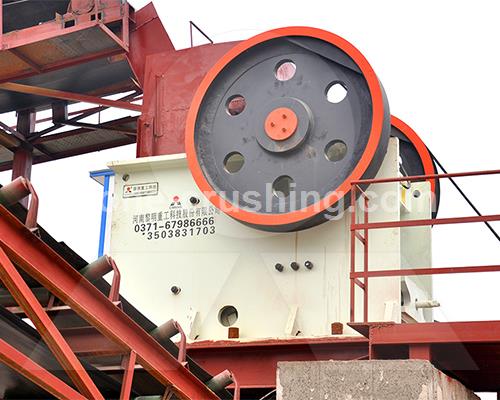
1. Primary Crushers:
Primary crushers are typically the first step in the coal handling process. They are designed to receive the raw coal and reduce its size to a manageable level. Jaw crushers and gyratory crushers are commonly used as primary crushers in coal handling plants. Jaw crushers operate by squeezing the coal between two rigid surfaces, whereas gyratory crushers have a conical head that gyrates inside an inverted cone, crushing the coal.
2. Secondary Crushers:
Secondary crushers are used to further reduce the size of coal after it has passed through the primary crushers. These crushers enhance the coal's liberation and ensure that it meets the desired specifications for transportation and utilization. Cone crushers and impact crushers are commonly employed as secondary crushers in coal handling plants. Cone crushers use a rotating cone-shaped mantle that oscillates within a concave bowl, crushing the coal against the bowl's walls. Impact crushers, on the other hand, utilize impact forces to break down the coal particles.
3. Tertiary Crushers:
Tertiary crushers are used to obtain the final size of coal required for various applications. They refine the coal further and provide a consistent particle size distribution. Roll crushers and hammer mills are commonly used as tertiary crushers in coal handling plants. Roll crushers compress the coal between two rotating rollers, while hammer mills utilize the impact of rotating hammers to crush the coal.
4. Sizing Crushers:
Sizing crushers are specialized types of crushers used to ensure the coal is sized according to specific requirements. These crushers can produce different size fractions of coal to cater to various industrial needs. Vibrating screens, rotary breakers, and toothed roll crushers are examples of sizing crushers commonly employed in coal handling plants. Vibrating screens separate coal particles based on their size, while rotary breakers and toothed roll crushers break down the coal through a combination of impact, compression, and shear forces.
In coal handling plants, various types of crushers are utilized to break down the coal into smaller, more manageable sizes. Primary crushers initiate the process by reducing the coal's size, followed by secondary crushers that further refine it. Tertiary crushers produce the final required size for specific applications, and sizing crushers ensure the coal is sorted into different fractions. Each type of crusher plays a crucial role in coal handling plants, contributing to efficient coal processing and meeting the requirements of downstream operations.



