Language Spare Parts Google Views

In the realm of material processing and size reduction, impact crushers have emerged as a formidable technology. These versatile machines are engineered to efficiently crush a wide range of materials, delivering a significant impact on various industries. From mining and construction to recycling and agriculture, impact crushers have revolutionized the way materials are processed. In this article, we will delve into the diverse applications of impact crushers and explore how they have transformed the landscape of modern industries.
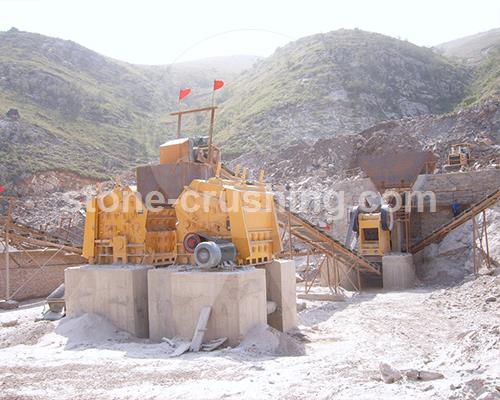
Impact crushers are mechanical machines designed to break down materials using the force of impact. They operate on the principle of rapid collision, where a high-speed rotor strikes the input material, causing it to shatter into smaller fragments. The resulting crushed material can then be used for various purposes, depending on the application and desired product size.
1. Mining and Quarrying
In the mining and quarrying industry, impact crushers play a crucial role in extracting valuable minerals and aggregates from the Earth's crust. These crushers excel at processing hard and abrasive materials, such as limestone, granite, and ores like iron ore and copper. Impact crushers in mining often work in tandem with screens and conveyors to efficiently process and transport the crushed material.
2. Construction and Demolition
In the construction sector, impact crushers have become indispensable for recycling concrete, asphalt, and other construction waste. They enable the reuse of demolished materials, reducing the need for new resources and promoting sustainable construction practices. Moreover, impact crushers are employed in the construction of roads, highways, and infrastructure projects to produce aggregates of specific sizes and shapes.
3. Manufacturing and Industrial Processes
Impact crushers find applications in various manufacturing and industrial processes. They are used in cement plants to crush clinker, in ceramic manufacturing to pulverize raw materials, and in the stone industry to process chemicals and fertilizers. These crushers provide consistent particle sizes, ensuring the uniformity and quality of the end product.
4. Agriculture and Soil Stabilization
Agriculture benefits from impact crushers in multiple ways. They are used to crush agricultural limestone, which is then spread on fields to improve soil fertility and pH levels. Additionally, impact crushers aid in soil stabilization, where they crush and mix additives into the soil to enhance its load-bearing capacity and prevent erosion.
5. Recycling and Waste Management
In the era of environmental consciousness, impact crushers are indispensable in recycling facilities. These machines efficiently break down materials like plastics, glass, and metal, enabling the recycling of these materials into new products. Impact crushers also play a significant role in waste management by reducing the volume of waste materials before disposal.
The versatility and efficiency of impact crushers have transformed industries across the globe. From mining and construction to recycling and agriculture, these machines have made a significant impact on material processing and resource utilization. As technology continues to advance, impact crushers are expected to become even more efficient, enabling industries to achieve higher productivity and sustainable practices.



