Language Spare Parts Google Views

When it comes to optimizing the performance of a gyratory crusher, one of the crucial factors to consider is its rotational speed. The correct speed ensures that the crusher operates efficiently, delivering the desired output while maintaining the integrity of the machinery. In this article, we will delve into the intricacies of calculating gyratory crusher speed and explore why it matters for achieving optimal crushing results.
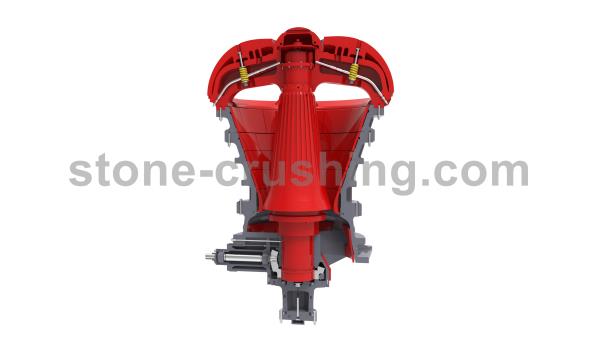
Gyratory crushers are heavy-duty machines used to crush hard and abrasive materials in mining and quarrying applications. The speed at which the crusher mantle rotates, known as the gyratory crusher speed, plays a significant role in determining the crusher's performance. The speed affects various factors such as throughput capacity, product size distribution, and power consumption.
The formula for calculating gyratory crusher speed is relatively straightforward:
Where:
• RPM is the rotational speed of the crusher mantle in revolutions per minute.
• V is the circumferential speed of the crushing chamber in meters per second.
• D is the diameter of the crusher mantle in meters.
• α is the angle of the mantle's inclination from the vertical axis.
1. Material Characteristics: The hardness, abrasiveness, and fragmentation properties of the material being crushed influence the optimal crusher speed. Harder materials may require slower speeds to prevent excessive wear, while softer materials might benefit from higher speeds for better crushing efficiency.
2. Cavity Design: The shape and design of the crushing chamber also impact the required speed. A well-designed cavity can allow for better material flow and distribution, affecting the overall crushing process.
3. Liner Profile: The shape and arrangement of the mantle and concave liners affect the material's trajectory inside the crushing chamber. This, in turn, impacts the optimal speed to achieve the desired product shape and size.
4. Eccentricity: The eccentric throw, which is the distance the mantle moves during one cycle of gyration, is another parameter that can influence the crusher speed. A larger eccentric throw might necessitate lower speeds to maintain proper crushing action.
1. Efficient Crushing: Optimal crusher speed ensures that the material is properly crushed and processed, leading to higher efficiency in material reduction.
2. Product Uniformity: Controlling the crusher speed contributes to consistent product size distribution, which is crucial for downstream processes.
3. Wear Reduction: The right speed can minimize wear on the mantle and concave liners, prolonging the operational life of the crusher components.
In the realm of gyratory crushers, mastering the calculation of crusher speed is pivotal for achieving top-notch performance and efficiency. Balancing factors like material characteristics, cavity design, liner profiles, and eccentricity can help determine the optimal speed that ensures effective crushing while minimizing wear and energy consumption. By understanding and applying the formula for calculating gyratory crusher speed, operators and engineers can fine-tune their crusher operations, resulting in enhanced productivity and reduced operational costs.



