Language Spare Parts Google Views

In the ever-evolving world of mining and construction, stone cone crushers have become essential tools for effectively processing aggregate materials. These devices are renowned for their ability to crush hard rocks into smaller, manageable sizes, which makes them indispensable for various industries. The versatility and efficiency of cone crushers have led to the development of different types, each tailored to meet specific needs. Let's take a closer look at the different types of stone cone crushers available in the market today.
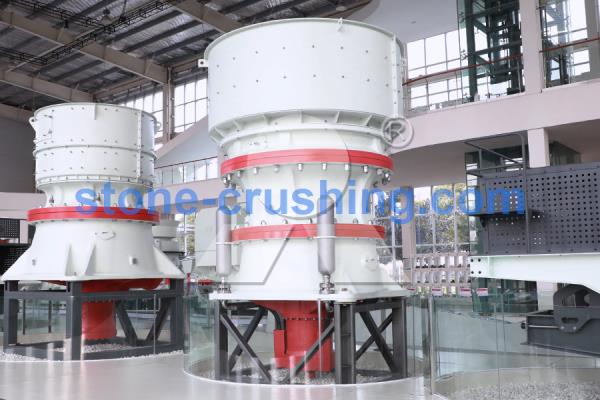
1. Standard Cone Crusher
The standard cone crusher is the most commonly used type for secondary and tertiary crushing applications. It features a steep crushing chamber and a relatively high pivot point, which enables it to produce a finely crushed output. This type is effective on materials that are medium to high in hardness, such as granite, basalt, and limestone. The standard cone crusher yields a uniform product shape, which is often desirable in the construction industry.
2. Short Head Cone Crusher
As the name suggests, a short head cone crusher has a shorter crushing chamber and steeper head angle compared to the standard version. This design allows for smaller discharge sizes, making it ideal for producing finer aggregates. Short head cone crushers are often used for secondary, tertiary, or quaternary crushing where the final product requires a finer texture. They are particularly well-suited for hard, abrasive materials, including silicate minerals.
3. Hydraulic Cone Crusher
Hydraulic cone crushers incorporate hydraulic technology for adjusting the size of the discharge, as well as for providing overload protection. This type of crusher delivers a more consistent performance and minimizes downtime, leading to increased productivity. The hydraulic cone crusher is versatile and can be used for various applications, including limestone, marble, and granite crushing. It is well-known for its efficiency and ability to handle tougher materials.
4. Spring Cone Crusher
One of the traditional designs, the spring cone crusher utilizes springs to hold the upper frame and the eccentrically rotating shaft together. This configuration helps maintain the optimum spacing between the crushing surfaces, ensuring a uniform product. Despite being an older design, spring cone crushers remain popular due to their simplicity, ease of maintenance, and cost-effectiveness. They are often used for medium and fine crushing of various ores and rocks.
5. Mobile Cone Crusher
In recent years, the mobile cone crusher has gained significant popularity, particularly in complex stone sites where space is limited. This type of cone crusher is mounted on a chassis, allowing it to be easily transported between locations. Mobile cone crushers deliver the same crushing efficiency as their stationary counterparts but offer additional flexibility and mobility. They are the go-to option for on-site crushing in road construction, mining, and recycling applications.
6. Gyratory Cone Crusher
Finally, the gyratory cone crusher features a unique design that enables it to handle larger volumes of materials. With a conical head and a wider base, this type of crusher is capable of producing high tonnage at efficient operating costs. While more complex than traditional cone crushers, gyratory models are ideal for primary crushing in large-scale mining operations.
Selecting the right type of stone cone crusher is crucial for ensuring efficiency and productivity in your operations. By understanding the unique features and benefits of each type, you can make an informed decision tailored to your specific crushing needs. Whether you're in construction, mining, or recycling, there is a cone crusher designed to help you achieve your goals.



