Language Spare Parts Google Views

Crusher machines are fundamental equipment used in various industries, from mining and construction to recycling. Their role is to reduce the size of large rocks, ores, and other materials into smaller, more manageable pieces. This makes crushing an essential process in materials handling, paving the way for further processing or usage. There are several types of crusher machines available, each designed for specific applications and materials. In this article, we’ll explore the most common types of crusher machines and their working principles.
1. Jaw Crusher
The jaw crusher is one of the oldest and most widely used crushers in industries. It features two jaws – one fixed and one that moves back and forth – to crush materials. When the movable jaw exerts force on the material, it is compressed and broken down. Jaw crushers are ideal for crushing hard and abrasive rocks, such as granite and basalt. They are typically used as primary crushers to reduce large pieces of material for subsequent processing.
- Simple structure
- Reliable operation
- Easy maintenance
2. Gyratory Crusher
Similar in design to the jaw crusher, the gyratory crusher has a conical shape and works the principle of compression. The main difference lies in its continuous crushing capability thanks to its gyrating spindle inside a concave hopper. Gyratory crushers are used for large-scale mining operations and heavy-duty crushing tasks, typically handling materials of higher size and hardness.
- High capacity
- Suitable for hard materials
- Low maintenance compared to jaw crushers
3. Cone Crusher
A cone crusher operates with a spinning cone inside a fixed outer shell, which crushes material by squeezing it between the cone and the shell. These machines are well-suited for secondary and tertiary crushing stages, offering fine crushing of ores and rocks. They are popular in construction, mining, and aggregate industries.
- High crushing efficiency
- Produces relatively uniform particles
- Adjustable output size
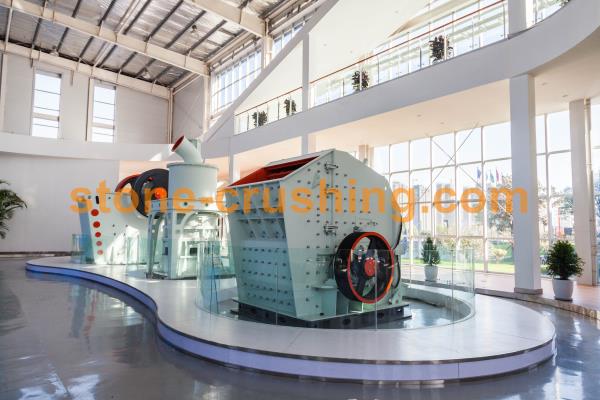
4. Impact Crusher
Impact crushers utilize impact force to break down materials. When materials enter the crusher, they are struck by high-speed rotating bars or blow bars attached to the rotor. This type of crusher is perfect for softer materials such as limestone, coal, and some recycled materials. It also produces less dust and generally offers more shape control in the output.
- Produces cubical products
- Good for soft to medium-hard materials
- Capable of handling recycled materials
5. Hammer Crusher
The hammer crusher features a series of hammers that rotate on a shaft, striking and crushing materials against a fixed surface. It is effective for crushing medium-hard materials and can handle both dry and wet materials, making it versatile for various applications like coal, cement, and gypsum crushing.
- High crushing ratio
- Simple design
- Can handle materials with moisture
6. Roll Crusher
Roll crushers work by using two rotating cylinders that crush materials between them. These are best suited for crushing coal or soft materials to a uniform size. They produce a relatively narrow particle size distribution and are often used in mineral processing and recycling.
- Produces fine, uniform particles
- Low dust production
- Easy maintenance
Choosing the right crusher machine depends largely on the material to be processed, output size requirements, and production capacity. Understanding the different types of crushers available allows industries to optimize crushing processes, improve efficiency, and reduce costs. Whether it’s a jaw crusher for primary crushing or an impact crusher for producing shaped aggregates, each machine plays a vital role in modern material processing.



