Language Spare Parts Google Views

Copper is one of the most widely used metals in various industries due to its excellent thermal and electrical conductivity, corrosion resistance, and malleability. In order to obtain pure copper, it undergoes a series of processes including crushing and concentration. These steps are crucial in extracting copper from its ore and ensuring its high quality for use in different applications.
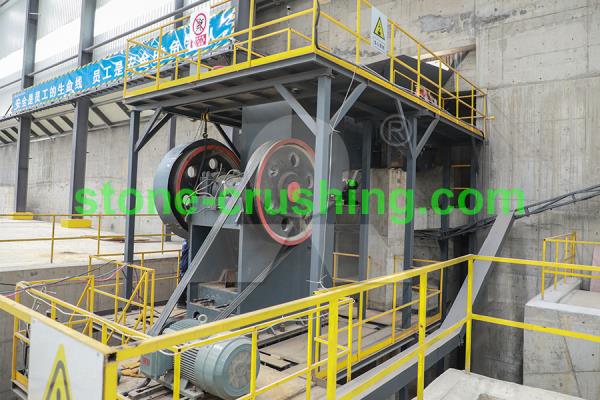
The first step in the copper extraction process is crushing. This involves reducing the size of the copper ore particles through a combination of mechanical and stone processes. Initially, the ore is blasted or drilled underground or in an open-pit mine to break it into smaller pieces. These chunks are then transported to a crushing machine where they are further reduced in size.
Various types of crushing equipment such as jaw crushers, cone crushers, and impact crushers are utilized in this process. Jaw crushers, which are often used in primary crushing, apply compressive force to break down the ore into smaller pieces. Cone crushers, on the other hand, use a rotating cone-like mantle to crush the ore between its surface and the concave liner. Lastly, impact crushers use the principle of impact and collision to break the ore into smaller fragments.
Once the ore is crushed, the next step is concentration. Concentration refers to the separation of valuable minerals from the gangue, or unwanted material. In the case of copper, this involves using various techniques such as flotation and gravity separation.
Flotation is a widely used method for copper concentration. This technique relies on the surface properties of the copper minerals being different from those of the gangue minerals. The crushed ore is mixed with water and chemicals known as collectors that selectively attach to the copper minerals, forming a froth. The froth is then skimmed off, dried, and processed further to obtain pure copper.
Gravity separation, on the other hand, exploits the difference in density between the copper minerals and the gangue minerals. By using equipment such as jigs, spirals, and shaking tables, the crushed ore is subjected to a gravitational force that allows the copper to settle and separate from the lighter gangue particles.
The concentration process is essential to increase the copper content in the ore and remove impurities, ultimately producing a higher-grade concentrate suitable for further processing and refining. The concentrated copper ore is then sent to smelters for the final stage in obtaining pure copper.
In closing, the crushing and concentration of copper are vital steps in the extraction process. Through crushing, the ore is reduced to a smaller size, facilitating the subsequent concentration process. Concentration, on the other hand, involves separating the copper minerals from the unwanted gangue minerals, resulting in a higher-grade concentrate suitable for further refining. These processes play a crucial role in ensuring the purity and quality of the copper extracted, making it a valuable resource in various industries.



