Language Spare Parts Google Views

The cement industry is a cornerstone of modern construction, providing the essential material needed to build infrastructure and structures worldwide. One crucial aspect of cement production is the crushing process, where crushers play a pivotal role in preparing raw materials for further processing. In this article, we will explore the significance of crushers in cement industries, their types, and how they contribute to the overall efficiency of the production process.
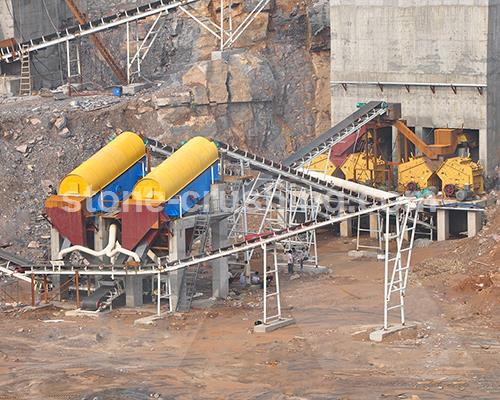
1. Understanding Cement Production: The cement manufacturing process involves several stages, starting from the extraction of raw materials such as limestone, clay, and shale, which are then crushed into smaller particles. The crushed materials are mixed and subjected to high temperatures in a kiln to produce clinker. Finally, the clinker is ground into a fine powder, known as cement, with the addition of gypsum.
2. The Role of Crushers: Crushers are mechanical devices designed to break down large rocks, minerals, and other raw materials into smaller, manageable sizes. In the cement industry, crushers are used to reduce the size of raw materials before they enter the grinding mills. This pre-processing step ensures that the raw materials are properly prepared for efficient grinding and subsequent blending.
3. Primary Crushers: Primary crushers are the first line of defense in the crushing process. They are typically large, robust machines that handle large feed sizes. Jaw crushers and gyratory crushers are commonly used as primary crushers in cement plants. These crushers break down the raw materials into smaller pieces, enabling easier handling and feeding into the secondary crushers.
4. Secondary Crushers: Secondary crushers play a vital role in further reducing the size of the crushed material. Cone crushers and impact crushers are commonly employed as secondary crushers in cement industries. These machines refine the raw materials into a finer consistency, ensuring uniformity and optimizing the efficiency of the grinding process.
5. Tertiary Crushers: Tertiary crushers are sometimes used in cement plants to produce even finer materials. These crushers provide the final stage of crushing before the raw materials enter the grinding mills. High-speed impact crushers or vertical shaft impactors (VSI) are commonly used as tertiary crushers, producing materials with the desired particle size distribution.
6. Benefits of Efficient Crushing: Efficient crushing with the use of crushers brings several advantages to the cement industry. It helps in maximizing the utilization of raw materials, reducing energy consumption, and achieving consistent quality in the final product. By crushing the raw materials to the desired size, crushers enable a more efficient and uniform grinding process, leading to improved overall productivity and cost-effectiveness.
7. Future Developments: The cement industry continues to witness advancements in crusher technology. Innovations such as automation, remote monitoring, and predictive maintenance are becoming more prevalent, improving operational efficiency and reducing downtime. Additionally, there is a growing focus on sustainability, leading to the development of eco-friendly crushers that minimize environmental impact.
Crushers are indispensable machines in the cement industry, contributing to the efficient production of high-quality cement. By reducing the size of raw materials, crushers ensure optimal grinding and blending processes, resulting in cost savings, improved productivity, and consistent product quality. As technology continues to advance, crushers in the cement industry are evolving to meet the demands of a more sustainable and efficient future.



