Language Spare Parts Google Views

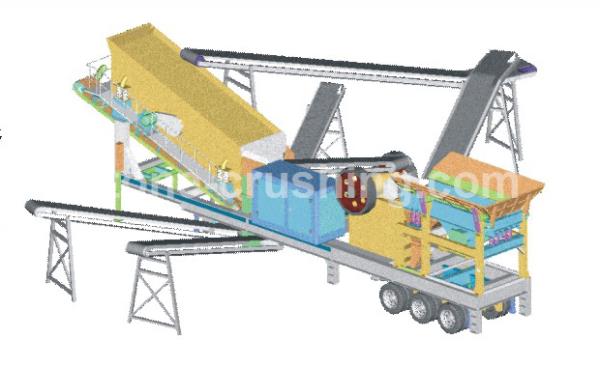
Portable rock crushers have immensely revolutionized the mining and quarrying industry due to their efficient and versatile design. These machines are capable of cutting through the toughest of rocks, making them invaluable tools in the field of crushing. However, the sheer variety of portable rock crusher models available may leave you scratching your head when it comes to choosing the right one for your project. In this article, we will delve into the anatomy of a portable rock crusher and discuss the essential components that make it so effective.
1. Crusher Body:
The main body of a portable rock crusher is a steel fabrication, built to withstand harsh working conditions. Through its sturdy construction, the crusher provides increased durability and longevity, even in challenging environments. The body is specifically designed to house the crucial components that make up the crushing mechanism, such as the jaw or impact crusher.
2. Feed Hopper:
The feed hopper, or simply the hopper, is a receptacle for feeding the rock material into the crusher. With a hopper, you can ensure a consistent flow of material, reducing the risk of clogging or blockages. A well-designed hopper also prevents large rocks from falling directly into the crushing chamber, which could cause damage to the machine.
3. Crushing Chamber:
The crushing chamber comprises of a fixed jaw, movable jaw, and an eccentric shaft. With the movement of the jaws, crushing is achieved by squeezing the rock material between the stationary and moving jaws. This process generates a compressive force that breaks down the rocks into smaller pieces. Depending on the desired product size, the crushing chamber can be adjusted to different settings.
4. Conveyor Systems:
To streamline the production process and minimize manual handling of crushed material, many portable rock crushers feature a conveyor belt mechanism for transport. These conveyor systems allow for efficient and continuous movement of crushed material, enhancing overall productivity and reducing labor costs.
5. Control Panel:
Modern portable rock crushers are equipped with advanced control systems that allow operators to regulate the entire crushing process from a centralized control panel. This panel or dashboard not only provides real-time monitoring of various parameters but also allows for adjustments in settings, ensuring optimal performance and efficiency.
6. Power Source:
Portable rock crushers require a power source to operate. Depending on the model, there are different options available, such as diesel engines, electric motors, or even a combination of both. The power source enables the rock crusher to be mobile and self-propelled, providing flexibility and freedom to crush rocks anywhere.
The anatomy of a portable rock crusher is complex yet comprehensible to understand. Its impressive range of features and versatility further contribute to its increasingly vital role in various industries, including mining, quarrying, and construction. As technology continues to advance, these machines will only become more efficient and effective, enabling professionals to tackle even the toughest rock-crushing tasks with ease.



