Language Spare Parts Google Views

In the world of material processing, crushing and sieving are fundamental techniques used to transform raw materials into desired products. These processes play a pivotal role across various industries, from construction to mining and agriculture. This article aims to shed light on the significance of crushing and sieving, exploring their benefits, methodologies, and their impact on final product quality.
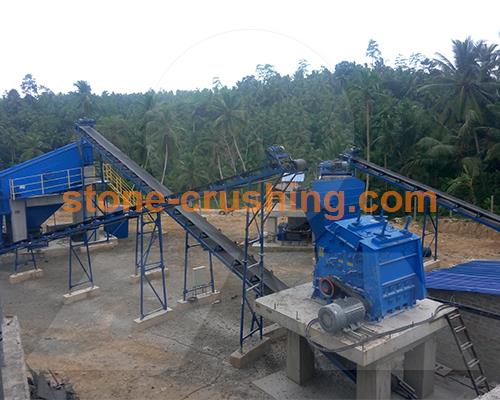
Crushing is the action of reducing the size of large solid materials into smaller fragments. It is a crucial step in the initial stages of material processing. This process allows raw materials to be more easily handled, transported, and further processed. Crushing is performed using mechanical equipment like crushers and breakers, operating based on principles such as compression, impact, and attrition.
1. Enhances Accessibility: By breaking down large materials, crushing improves accessibility and facilitates efficient material handling during subsequent stages of production.
2. Enables Uniformity: Crushing ensures a consistent particle size distribution, resulting in homogeneous material properties, and therefore better product quality.
3. Increases Surface Area: Smaller particle sizes expose a greater surface area, making it easier to extract valuable substances or reactants from the material.
Sieving is the process of separating particles based on their size. It involves passing a mixture of particles through a sieve or mesh, where smaller particles pass through while larger particles are retained. Sieving is commonly used to obtain a desired particle size range for further processing or to remove impurities.
1. Particle Size Control: Sieving helps ensure that materials meet specific size requirements necessary for their intended application, ensuring accurate and consistent end-product quality.
2. Impurity Removal: Sieving is effective in removing unwanted substances like debris, dirt, or oversized particles, enhancing the purity of the final product.
3. Fractionation: Sieving allows for the separation of materials based on particle size, enabling the collection of different fractions for specific purposes.
Crushing and sieving are often performed sequentially or even simultaneously to optimize material processing. When combined, these techniques offer numerous advantages:
1. Improved Efficiency: When oversized materials are crushed before sieving, the sieving process becomes more efficient, as smaller particles are sieved more readily.
2. Customization: By adjusting the crushing and sieving parameters, it is possible to achieve specific particle size distributions, tailored to the requirements of different industries or applications.
3. Waste Reduction: Integrating crushing and sieving helps to minimize material wastage as undersized or incomplete particles can be recycled or reprocessed.
Crushing and sieving are indispensable processes in material processing industries. They allow for the transformation of raw materials, enhancing their utility and securing their place in the production chain. By crushing and sieving materials, industries can optimize particle size distribution, enhance accessibility, improve product quality, and reduce waste. Whether in construction, mining, or agriculture, understanding the importance and methodologies of crushing and sieving contributes to efficient material processing practices.



