Language Spare Parts Google Views

In the realm of mineral processing, the terms "crushing" and "grinding" are commonly used to describe the comminution of ores and minerals. While both processes are integral to achieving the desired particle size, understanding the types of crushing and grinding techniques available can greatly enhance efficiency and optimize the overall operation. In this article, we aim to demystify the various types of crushing and grinding to provide a comprehensive guide for professionals operating in the field of mineral processing.
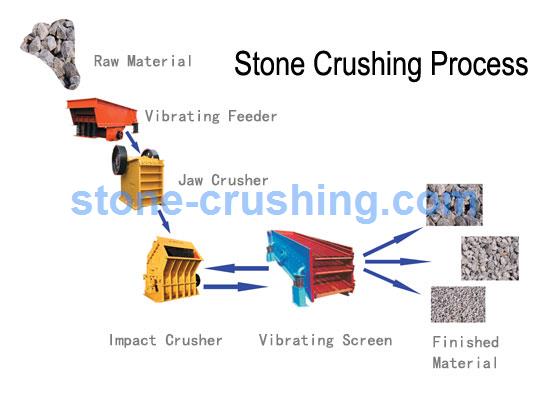
1. Crushing Methods:
1.1 Primary Crushing:
Primary crushing refers to the initial size reduction of raw materials, often accomplished by a jaw or gyratory crusher. This process is usually employed for large-sized rocks or ores and aims to produce a product size suitable for secondary crushing.
1.2 Secondary Crushing:
Secondary crushing involves reducing the size of the primary crushed materials using a cone or impact crusher. It is typically used in situations where further size reduction is required to achieve the desired particle size distribution.
1.3 Tertiary Crushing:
Tertiary crushing is the next step in the crushing process, where the material is further reduced to a finer size by using specialized equipment such as cone crushers or vertical shaft impactors. This stage is mainly focused on generating a high-quality end product for mill feed or final product applications.
2. Grinding Methods:
2.1 Ball Mills:
Ball mills are widely used in mineral processing and are typically employed to grind ore particles to a fine size. The process involves feeding the material into a rotating drum filled with steel balls, which impact and grind the ore as it rotates. This method is highly efficient for producing a uniform product size and is commonly used in the mining industry.
2.2 Rod Mills:
Rod mills operate similarly to ball mills but use long steel rods instead of balls as the grinding media. This type of grinding equipment is often used in primary grinding applications and is known for its robustness and adaptability. Rod mills are particularly suitable for coarse grinding and can handle a wide range of feed sizes.
2.3 Autogenous and Semi-Autogenous Mills:
Autogenous (AG) and semi-autogenous (SAG) mills utilize the ore itself as grinding media rather than relying on steel balls or rods. These mills are capable of handling larger feed sizes and are commonly used in the mining industry for primary grinding. AG and SAG mills are known for their energy efficiency and ability to process a wide range of ores.
2.4 High-Pressure Grinding Rolls (HPGR):
HPGR technology involves compressing and grinding the ore between two rotating rollers, resulting in fine and uniform particle size reduction. This method offers several advantages, including reduced energy consumption and improved mineral liberation. HPGR is commonly used as a tertiary or quaternary grinding option in mineral processing circuits.
Understanding the various types of crushing and grinding techniques available is crucial for professionals in the field of mineral processing. Each method serves a specific purpose and can significantly impact the efficiency and productivity of a processing plant. By selecting the most appropriate technique for a given application, operators can optimize particle size reduction and achieve desired product specifications. Whether it's primary, secondary, or tertiary crushing, or using ball mills, rod mills, autogenous or semi-autogenous mills, or even high-pressure grinding rolls, each method offers unique advantages and plays a vital role in the overall comminution process.



