Language Spare Parts Google Views

The construction and demolition industry generates massive amounts of concrete waste every year. Recycling this concrete is not only environmentally responsible but also economically advantageous, turning waste into a valuable resource. While primary crushing breaks down large chunks of concrete into manageable sizes, the real magic – and often the key to a high-quality recycled aggregate – lies in secondary crushing.
This isn't just about making the pieces smaller; secondary crushing plays a crucial role in improving the overall quality and consistency of the recycled concrete aggregate (RCA). Let's delve into why it's so vital:
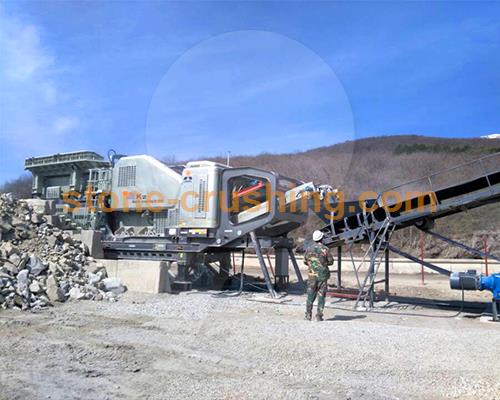
* Improved Particle Size Distribution: Primary crushers often leave behind a wide range of particle sizes. Secondary crushing refines this distribution, creating a more uniform product. This uniformity is critical for achieving consistent concrete mixes in subsequent applications. A well-graded RCA ensures proper compaction and strength in the new concrete.
* Enhanced Cubicity: Primary crushing can leave behind many irregularly shaped pieces with flaky or elongated forms. These shapes don't pack efficiently, leading to weaker concrete. Secondary crushing helps improve the cubicity (the degree to which a particle is cube-shaped) of the RCA, improving its overall performance in new concrete mixes.
* Removal of Contaminants: While pre-processing aims to remove large contaminants like rebar and wood, smaller debris can remain. Secondary crushing, especially with impact crushers, can further break down these smaller contaminants, leading to a cleaner final product. This is vital for ensuring the quality of the recycled aggregate meets specifications for various applications.
* Increased Production Efficiency: Although seemingly counterintuitive, adding a secondary crushing stage can actually increase overall production efficiency. By creating a more uniform and usable product, the need for further processing or rejection of unsuitable materials is reduced, streamlining the entire recycling process.
* Meeting Specific Application Requirements: The final size and shape of the RCA are crucial for its intended use. Secondary crushing allows for greater control over these parameters, enabling the production of RCA tailored to specific projects. For example, finer RCA might be suitable for concrete overlays, while coarser material might be better for base layers in road construction.
Several crusher types are suitable for secondary crushing of concrete, each with its own strengths:
* Cone Crushers: Excellent for producing a well-graded product with high cubicity, ideal for finer RCA.
* Impact Crushers: Best for breaking down softer materials and contaminants, improving the overall cleanliness of the aggregate.
* Jaw Crushers: Can be used for secondary crushing, but generally less effective than cone or impact crushers in achieving optimal particle shape and size distribution.
Secondary crushing is not a luxury but a necessity for efficient and effective concrete recycling. By refining the output of primary crushing, it improves the quality, consistency, and usability of recycled concrete aggregate, making it a viable and sustainable alternative to virgin aggregates. Investing in a robust secondary crushing system is a smart move for any construction and demolition company committed to sustainable practices and maximizing the value of their waste materials.



