Language Spare Parts Google Views

Crushing and grinding are two fundamental processes in the mining industry. These processes are essential for the liberation of the valuable minerals from the waste rock or gangue material. The principal aim of crushing and grinding is to reduce the size of the ore or rock particles to enable easy separation or concentration of the valuable minerals.
The principle of crushing involves the use of mechanical forces that are applied to the material to break it down into smaller particles. Crushers are employed in the crushing process, and they come in different forms such as jaw crushers, gyratory crushers, cone crushers, roll crushers, and impact crushers. The choice of crusher depends on the size of the material and the desired product size.
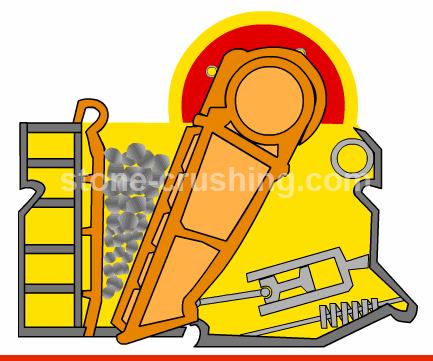
Jaw crushers are commonly used for primary crushing, and they operate by compressing the material between two plates. Gyratory crushers are used for larger rocks, and they operate by a gyrating motion while crushing the material. Cone crushers are similar to gyratory crushers, but the crushing chamber is not as steep, and the material is crushed between a truncated cone and a mantle. Roll crushers and impact crushers are used for smaller particles, and they rely on the impact of the material against a rotating drum or rotor.
The principle of grinding involves the use of high-energy mechanical forces that are applied to the material to break it down into smaller particles. Grinding is usually done by tumbling mills, which include ball mills, rod mills, and autogenous mills. The choice of mill depends on the size of the material, the desired product size, and the amount of energy required to grind the material.
Ball mills have a rotating cylinder filled with steel balls that grind the material as the cylinder rotates. Rod mills are similar to ball mills but use rods instead of balls. Autogenous mills use the material itself as the grinding media, and they are used for very large particles.
The principal aim of crushing and grinding is to achieve the desired particle size distribution for the downstream process. The particle size distribution affects the recovery of the valuable minerals, and it also affects the cost of the downstream process. If the particle size is too large, the valuable minerals may not be liberated from the waste rock, and if the particle size is too small, the downstream process may become too expensive.
In closing, the principal of crushing and grinding is fundamental to the mining industry. These processes are essential for the liberation of the valuable minerals from the waste rock or gangue material. The choice of crusher and mill depends on the size of the material, the desired product size, and the amount of energy required to grind the material. By achieving the desired particle size distribution, the recovery of the valuable minerals can be optimized, and the cost of the downstream process can be reduced.



