Language Spare Parts Google Views

In the mining industry, the extraction and production of copper are vital processes that require cutting-edge machinery to maximize efficiency. Among the critical components of these processes is the primary crusher, a machine designed to reduce large rocks into smaller rocks for further processing. Today, we will explore the importance and functionality of a primary crusher in copper production.
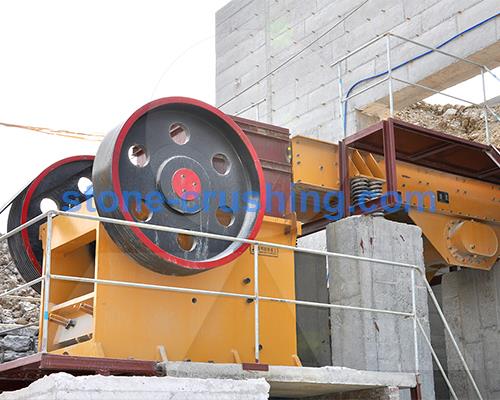
A primary crusher plays a crucial role in the copper mining process by reducing large blocks of ore into smaller pieces that can be easily processed. This process ensures that the copper minerals are efficiently liberated from the surrounding rock, thereby maximizing the overall productivity of the mine. Here are some key reasons why a primary crusher is essential in copper production:
1. Size Reduction: The primary crusher's primary function is to reduce the size of the ore, enabling easier downstream processing. By breaking down the large rocks, the crusher facilitates efficient extraction and separation of valuable copper minerals from the remaining ore.
2. Efficiency Improvement: Optimal size reduction achieved by a primary crusher enhances the overall efficiency of the entire copper production process. Smaller ore particles allow for increased surface area, which promotes better chemistry during subsequent stages, such as flotation and leaching, resulting in improved recovery rates.
3. Safety Enhancement: A primary crusher efficiently breaks down oversized rocks, reducing the risk of accidents and personnel injuries. Safer operations result in higher productivity and lower downtime, leading to overall operational cost savings.
Various types of primary crushers are utilized in the mining industry, each designed to handle specific types of materials and rock characteristics. The most common types of primary crushers for copper production include jaw crushers, impact crushers, and gyratory crushers.
1. Jaw Crushers: These crushers are widely used due to their simplicity and affordability. They feature a fixed jaw plate and a movable jaw plate, with the material being gradually crushed as it moves downwards between the jaws. Jaw crushers are ideal for medium to hard rock applications, making them suitable for copper ore processing.
2. Impact Crushers: These crushers use high-speed impact forces to break down rocks. They are preferred for softer materials or when a higher reduction ratio is required. Impact crushers are commonly used in copper mining operations to crush the ore before it is further processed.
3. Gyratory Crushers: These crushers are recognized for their large capacity and high power-to-weight ratio. They consist of a fixed concave surface and a movable mantle, which gyrates around the axis. Gyratory crushers are often used in large-scale operations, where high throughput and superior crushing capabilities are necessary.
In the realm of copper production, a primary crusher plays a pivotal role in unlocking the potential of the mining operation. By breaking down oversized rocks, it ensures efficient extraction of copper minerals while enhancing overall safety and productivity. Consequently, the appropriate selection and utilization of primary crushers contribute significantly to the success of copper production processes.



