Language Spare Parts Google Views

Welcome back, dear readers! Today, we're delving into the fascinating world of heavy machinery to understand the inner workings of a vital piece of equipment – the jaw crusher. As an essential tool in the mining and construction industries, the jaw crusher plays a significant role in crushing rocks and ores into smaller particles, making them suitable for various applications. In this article, we will unravel the secrets behind the operation of a jaw crusher and explore how it contributes to the extraction of valuable minerals and the construction of critical infrastructure.
Understanding the Jaw Crusher: A jaw crusher is a mechanical device designed to break down large rocks into smaller, more manageable pieces. It operates through a series of jaw plates, with one fixed and another movable. The movable jaw exerts force on the rock by pressing it against the fixed jaw until it breaks into smaller fragments. This process is powered by the engine, which provides the necessary energy to facilitate the crushing action.
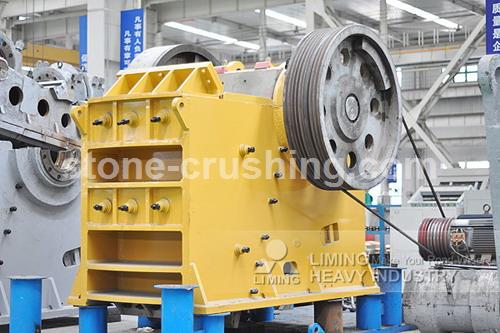
1. Frame: The sturdy frame provides support and ensures the crusher's stability during operation.
2. Jaw Plates: These are the two main crushing surfaces where the actual crushing takes place. The fixed jaw is generally vertical, while the movable jaw has a slight horizontal angle.
3. Pitman: The pitman connects the jaw plates to the eccentric shaft and translates the reciprocating motion of the eccentric shaft into a linear swinging motion of the jaws.
4. Eccentric Shaft: The eccentric shaft rotates, causing the movable jaw to move back and forth, creating the crushing action.
5. Flywheel: The flywheel serves as a reservoir for kinetic energy, helping to smoothen the crushing process and reduce power fluctuations.
6. Toggle Plate: The toggle plate is a safety mechanism that prevents any damage to the crusher in case of an overload or material jam.
1. Start-up: Before starting the jaw crusher, operators must conduct a thorough inspection, checking for any loose parts or signs of wear. Proper lubrication of all bearings is essential to ensure smooth operation.
2. Feeding the Crusher: Once the crusher is ready, feed the material into the chamber gradually and evenly. Avoid overloading the crusher, as it may lead to uneven wear and reduced performance.
3. Crushing Process: As the eccentric shaft rotates, the movable jaw moves back and forth against the fixed jaw, breaking the material into smaller pieces.
4. Discharge: The crushed material is discharged from the bottom of the crusher. The size of the discharged particles depends on the setting of the crusher.
1. Always wear appropriate personal protective equipment (PPE) while operating the jaw crusher.
2. Follow the manufacturer's guidelines for maintenance and servicing.
3. Never attempt to adjust the crusher while it is in operation.
4. Regularly inspect the crusher for signs of wear and tear.
Thus, the jaw crusher is an essential piece of machinery that facilitates the crushing of rocks and ores, enabling us to extract valuable minerals and create the building blocks of modern infrastructure. Understanding its operation and maintenance is crucial to ensure its efficient and safe utilization. By unraveling the mysteries behind the jaw crusher's operation, we hope to foster a deeper appreciation for the intricate mechanisms that power the industries shaping our world.



