Language Spare Parts Google Views

Limestone, that ubiquitous sedimentary rock, finds its way into countless products, from cement and construction materials to agricultural amendments and even toothpaste. But before it becomes the refined material we know, limestone undergoes a crucial transformation: crushing. And one of the most common workhorses in this process is the jaw crusher. Let's delve into the specifics of limestone crushing using this robust machine.
The journey of limestone from quarry to usable product begins with extraction. Large, raw blocks of limestone are excavated from the earth using various methods, often involving explosives and heavy machinery. These sizable chunks are then fed into the jaw crusher, the first stage in a multi-step size reduction process.
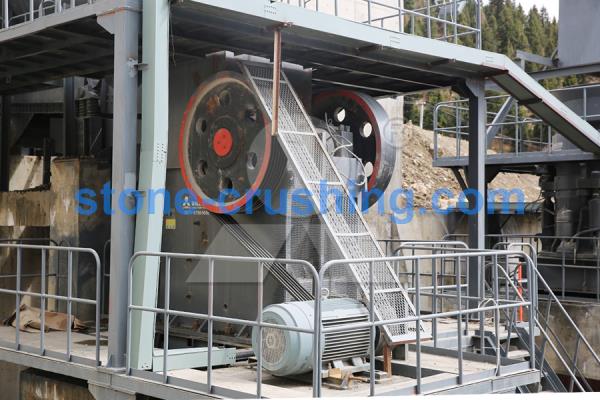
Jaw crushers are known for their simplicity and reliability, making them ideal for primary crushing of tough materials like limestone. They consist of two heavy jaws: a fixed jaw and a swinging jaw. These jaws are set at a specific angle and move in a crushing motion. The raw limestone is fed into the gap between the jaws. As the swinging jaw moves, it forces the limestone against the fixed jaw, creating a powerful compressive force that breaks the rock down into smaller pieces.
The size of the output material is determined by the gap between the jaws, which can be adjusted. This allows for control over the final product size, ensuring the limestone is appropriately sized for the next stage of processing. Larger gaps produce larger pieces, while smaller gaps create finer material. This flexibility is crucial, as different applications require different sizes of limestone aggregate.
The output from the jaw crusher rarely represents the final product size. The crushed limestone typically undergoes further size reduction through secondary and tertiary crushing stages. These stages often involve different types of crushers, such as cone crushers, impact crushers, or roll crushers, each designed to achieve a specific size reduction and product consistency. After these stages, the limestone may be screened to separate different size fractions, ensuring a uniform product.
Several factors influence the efficiency and effectiveness of limestone crushing using a jaw crusher:
* Limestone Properties: The hardness, toughness, and fracture characteristics of the limestone significantly impact the crushing process. Harder limestone requires more energy and may lead to increased wear on the crusher components.
* Jaw Crusher Design: The size and configuration of the jaw crusher, including the jaw angle and material of construction, directly influence its capacity and efficiency.
* Maintenance: Regular maintenance, including lubrication, jaw replacement, and overall inspection, is crucial for ensuring optimal performance and extending the lifespan of the jaw crusher.
* Power Supply: Adequate power is necessary for efficient operation. Power outages or fluctuations can significantly affect the crushing process.
The jaw crusher is a fundamental component in the limestone crushing process. Its robust design and ability to handle large, raw limestone blocks make it an essential piece of equipment in the production of this valuable material. Understanding the process, from initial extraction to the final size reduction, highlights the intricate steps involved in transforming raw limestone into the diverse products we use daily.



