Language Spare Parts Google Views

Limestone crushing is an important step in the cement production process as it is the key stage in the manufacture of the final product. Limestone is a sedimentary rock that is also widely used in industries such as agriculture, metallurgy, construction, and stone engineering.
The limestone crushing process involves several stages that are important to ensure that the final product is of the desired quality. The first stage involves the extraction of limestone from the quarry, where it is either blasted or dug out of the ground. Once extracted, the limestone is transported to the crushing plant, which may be located some distance away from the quarry.
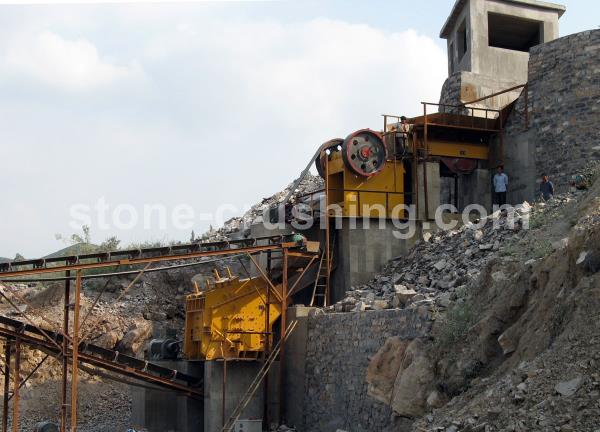
At the crushing plant, the limestone is crushed in several stages to a size that is suitable for further processing. The crushing process typically involves a primary crusher, followed by secondary and tertiary crushers.
In the primary crushing stage, the limestone is reduced to a size of about 250mm. This is done using a crusher such as a jaw crusher or gyratory crusher. The material is then fed into a secondary crusher, where it is further reduced to a size of about 50mm.
The final crushing stage involves using a tertiary crusher, such as a vertical shaft impactor, cone crusher, or impact crusher. Here, the limestone is reduced to a size of less than 10mm.
Once the limestone has been crushed to the desired size, it is screened to separate the different sizes of particles. The larger particles are used for construction purposes, while the smaller particles are used in the production of cement.
During the crushing process, it is important to ensure that the limestone is not contaminated with other materials, such as clay or sand. These impurities can affect the quality of the final product, which may lead to costly rework or rejection of the product.
In addition to crushing, the limestone may also undergo other processing steps, such as drying, grinding, and calcining. These processes are important to ensure that the limestone is chemically and physically suitable for the intended application. For instance, in the production of cement, the limestone is calcined at high temperatures to produce quicklime, which reacts with water to produce cement.
As a result, the limestone crushing process is a vital step in the production of cement and many other industries. It involves several stages that must be carried out with precision to ensure that the final product is of the desired quality. The process involves the extraction of limestone from the quarry, followed by crushing in several stages using primary, secondary, and tertiary crushers. The crushed limestone is then screened and may undergo other processing steps to produce the desired product. To achieve the desired quality, it is important to ensure that the limestone is not contaminated with impurities during the crushing process.



