Language Spare Parts Google Views

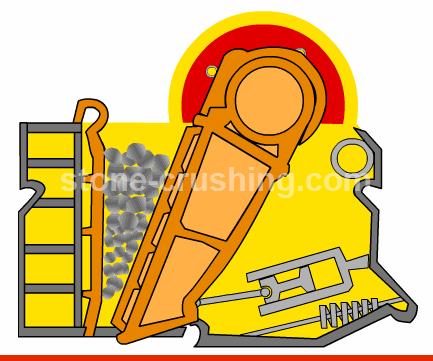
Jaw crushers are one of the most commonly used primary crushers in the mining and quarrying industry. They are designed to crush a variety of materials such as hard rocks, ores, and minerals into smaller sized aggregates. The working principle of jaw crushers is based on the reciprocating movement of the movable jaw that compresses and crushes the material against the fixed jaw.
The primary component of a jaw crusher is the movable jaw, which is attached to an eccentric shaft. The eccentric shaft rotates around its own axis and i is driven by the motor that powers the crusher. As the movable jaw moves back and forth, the material is crushed between the fixed jaw and the movable jaw.
The crushing process begins when the material enters the top of the jaw crusher through the hopper. The material is then crushed by the motion of the movable jaw as it moves back and forth against the fixed jaw. The crushed material passes through the gap between the jaws and falls down into the chute below.
As the material is crushed, it moves towards the bottom of the crusher and is discharged from the bottom of the machine. The size of the material that is discharged from the crusher is determined by the gap between the jaws. The smaller the gap, the finer the material that is produced.
Jaw crushers are commonly used in mining, metallurgy, building materials, highway, railway, water conservancy, and stone industries. They are designed to handle a wide range of materials from hard rocks to soft materials. The size and shape of the opening at the top of a jaw crusher determine the maximum size of the material that can be fed into it.
In the end, the working principle of a jaw crusher is relatively simple. However, it is the mechanical components of the machine that are responsible for producing the crushing action. The eccentric shaft, movable jaw, and fixed jaw all work together to produce the crushing action needed to break down materials. Jaw crushers are widely used in the industry and provide an efficient way to crush materials into smaller sized aggregates.



