Language Spare Parts Google Views

Jaw crushers are essential machines in the mining and quarrying industries. They are typically used as primary crushers or the first step in the process of reducing rock. Jaw crushers provide excellent coarse material crushing performance, ensuring the efficient reduction of materials for further processing. This article will delve into the working principle, components, and applications of jaw crushers, shedding light on their fundamental functioning.
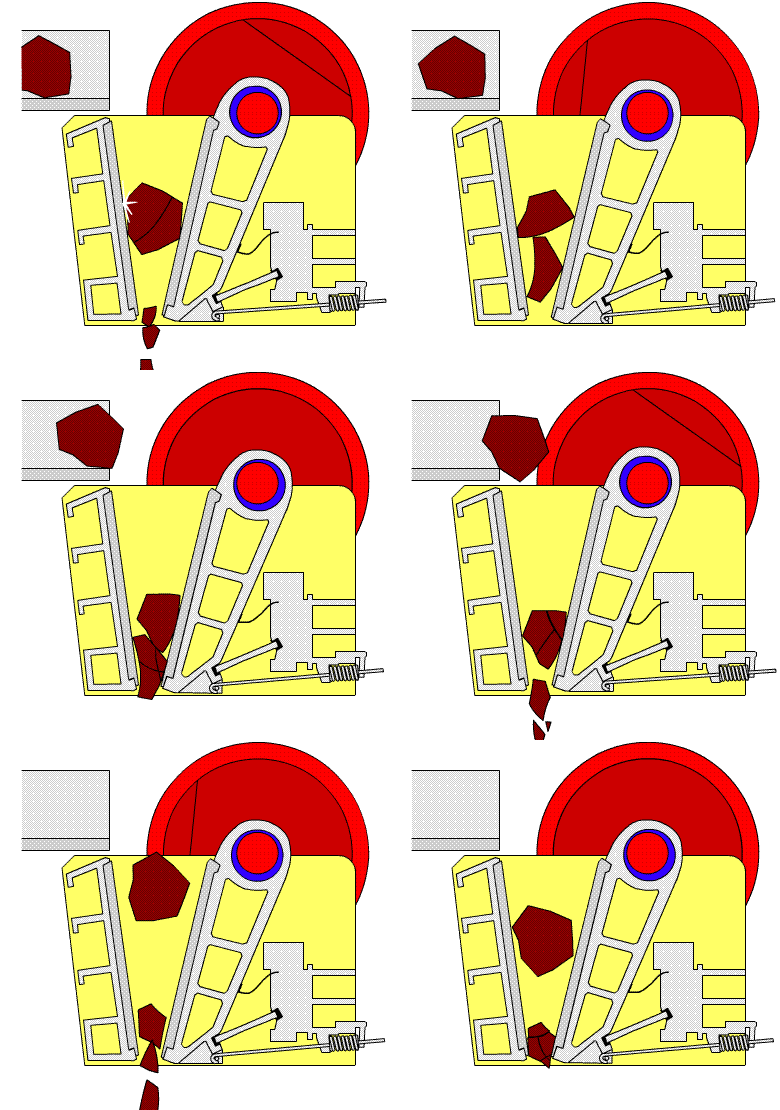
The working principle of a jaw crusher is straightforward - the jaw plates squeeze and crush the materials between them as the movable jaw moves towards the fixed jaw. The space between the jaws gradually decreases as the materials are crushed into smaller pieces. This crushing action is achieved by the eccentric movement of the main shaft and the swing jaw assembly.
1. Fixed Jaw: The fixed jaw is an integral part of the crusher frame and acts as a support base for the movable jaw. It provides strength and stability to the structure.
2. Movable Jaw: The movable jaw, also known as the swing jaw, plays a vital role in the crushing process. It moves back and forth against the fixed jaw, applying pressure to the materials and breaking them down into smaller sizes.
3. Eccentric Shaft: The eccentric shaft is a critical component that provides the jaw crusher with its crushing force. It is responsible for the reciprocating motion of the swing jaw and helps transmit power between the motor and the crushing mechanism.
4. Toggle Plates: These plates are located at the bottom of the swing jaw and offer additional strength and support. They act as a protective shield for the jaw crusher against excessive wear caused by the crushing process.
1. Mining Industry: Jaw crushers are extensively used in the mining industry for crushing various minerals and ores. They are widely utilized in underground mining operations due to their compact design and high productivity.
2. Quarrying Industry: Jaw crushers are employed in quarrying operations for processing large rocks and aggregates. They excel at breaking down tough and abrasive materials, making them ideal for primary crushing tasks.
3. Construction Industry: Jaw crushers find significant applications in the construction industry, where they are used to process construction waste, demolish structures, and recycle materials effectively.
4. Recycling Industry: With the growing emphasis on sustainability, jaw crushers are instrumental in the recycling industry. They can efficiently handle and process a variety of recyclable materials such as concrete, brick, and asphalt.
Jaw crushers play a crucial role in various industries by providing efficient and reliable crushing capabilities. Understanding the working principle and key components of jaw crushers enables us to appreciate their significance and maximize their potential in diverse applications. Their robust design, versatility, and ability to handle a wide range of materials make them indispensable in mining, quarrying, construction, and recycling operations. As technology continues to advance, jaw crushers are sure to witness further improvements in efficiency and performance, contributing to the progression of the industries they serve.



