Language Spare Parts Google Views

In the vast world of rock crushing equipment options, two commonly used devices stand out: the gyratory crusher and the cone crusher. Both of them are essential tools for reducing large rocks into smaller particles for further processing. However, these machines have distinct features and usage scenarios, making it crucial for operators to understand their differences before determining which one suits their specific needs. In this article, we will explore the characteristics, benefits, and drawbacks of gyratory crushers and cone crushers.
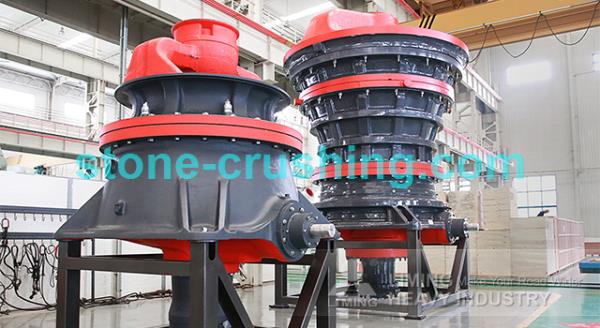
Gyratory crushers, often referred to as primary crushers, are extensively used in the mining industry for crushing various types of materials. Their prominent feature is a large concave-shaped chamber lined with crushing liners (mantles) and a conical head. Gyratory crushers work by rotating the central spindle and crushing material against the concave walls as it moves downward. This results in a more uniform product size with high throughput capacity.
- Superior capacity: Gyratory crushers are designed to handle large feed sizes and tackle higher tonnages compared to cone crushers. This makes them an excellent choice for primary crushing in large-scale operations.
- Versatile applications: From hard, abrasive ores to soft, friable rock, gyratory crushers are capable of handling a wide range of materials, making them suitable for various industries.
- Less maintenance: Gyratory crushers generally require less maintenance compared to cone crushers, reducing downtime and ensuring higher efficiency.
- Size and weight: Gyratory crushers are generally larger and heavier than cone crushers, making transportation and installation more challenging.
- Higher initial investment: Due to their complex design, gyratory crushers often come with a higher price tag, which might be a limiting factor for some operators.
Cone crushers, commonly used for secondary and tertiary crushing stages, operate similarly to gyratory crushers. The main difference lies in the crushing chamber design. While gyratory crushers have a concave surface and a conical head, cone crushers have a conical-shaped inner and outer mantle.
- Ease of operation: Cone crushers are relatively easy to operate and require minimal training. They offer adjustable settings for different production requirements, allowing operators to optimize the crushing process.
- Smaller footprint: Compared to gyratory crushers, cone crushers have a more compact design, making them suitable for smaller spaces or mobile applications.
- Lower initial cost: Cone crushers are generally more cost-effective initially than gyratory crushers, making them an attractive choice for budget-conscious operations.
- Lower capacity: Typically, cone crushers have lower throughput capacities compared to gyratory crushers. This can limit their suitability for high-volume operations.
- Less suitable for abrasive materials: Cone crushers are not recommended for crushing highly abrasive materials due to the potential for wear and tear on the crushing surfaces.
When selecting the right crushing equipment for your operation, understanding the differences between gyratory crushers and cone crushers is crucial. Gyratory crushers excel in high-capacity applications and versatile material handling, while cone crushers offer ease of operation and a smaller footprint.
It's essential to consider factors such as production requirements, available space, material characteristics, and budget constraints when deciding between the two. Consulting with industry experts and trusted equipment suppliers can guide you in making an informed choice.
Remember to prioritize efficiency, productivity, and longevity to ensure your crushing equipment aligns with your operational objectives.



