Language Spare Parts Google Views

Iron ore is one of the most important raw materials for steel production, making it vital for any successful industrial economy. In order to extract iron from its ore, a series of processes, including crushing, grinding, magnetic separation, flotation, and gravity separation, are commonly used. Among these, the crushing process plays a crucial role in iron ore processing and beneficiation. In this article, we will delve into the intricate workings of an iron ore crusher and shed light on its pivotal role in the steelmaking industry.
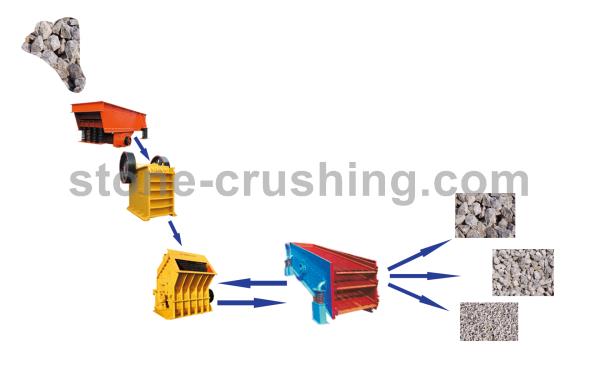
1. Primary Crushing:
The primary crushing stage involves the use of a heavy-duty jaw crusher. This jaw crusher is designed to reduce large chunks of raw iron ore into smaller pieces. A toggle plate and a pitman arm compress the material against a fixed jaw, thus breaking it into smaller fragments. The crushed material then moves towards the secondary crushing stage.
2. Secondary Crushing:
The secondary crushing stage aims to further reduce the iron ore to a size suitable for milling. Typically, a cone crusher or impact crusher is used for this purpose. Cone crushers operate by squeezing the material between an eccentrically rotating mantle and a concave bowl liner, while impact crushers utilize impaction to crush the ore. These crushers produce a finer end product with a high reduction ratio.
3. Fine Crushing and Screening:
After the secondary crushing stage, the iron ore is further reduced in size and screened to separate particles of varying sizes. Vibrating screens are commonly used to achieve this. The oversize material is sent back to the crushers for further crushing, while the undersize material flows to the next stage of processing.
4. Grinding and Magnetic Separation:
Once the ore is sufficiently crushed and screened, it undergoes grinding to further refine the particle size. Grinding mills, such as ball mills and autogenous mills, are used to achieve the desired liberation for subsequent magnetic separation. Magnetic separators utilize the magnetic properties of iron ore to separate it from other minerals. This process is crucial for enhancing the iron ore's purity and suitability for steelmaking.
5. Flotation and Gravity Separation:
In certain cases, depending on the iron ore's composition and impurity levels, additional beneficiation processes may be required. Flotation and gravity separation are commonly employed to remove impurities from the iron ore concentrate. Flotation involves adding chemicals to the ore slurry to selectively separate the desired minerals, while gravity separation utilizes differences in density to separate the ore particles.
The iron ore crusher plays a crucial role in the steel production process. By reducing large chunks of raw ore into smaller pieces, it facilitates efficient steelmaking. The primary and secondary crushing stages, along with grinding, magnetic separation, flotation, and gravity separation, ensure the extraction of high-quality iron ore suitable for steel production.
Understanding the detailed working process of an iron ore crusher allows us to appreciate its significance in the steelmaking industry. By effectively minimizing the size of raw ore particles, crushing equipment sets the foundation for efficient and sustainable iron ore processing. With technological advancements driving continuous improvements, the iron ore crusher's role in steel production will remain indispensable for years to come.



