Language Spare Parts Google Views

In the realm of mineral processing, crushing circuits play a crucial role in extracting valuable minerals from raw ores. These circuits are responsible for reducing the size of the ore particles, enabling efficient separation and concentration processes to take place. In this article, we will uncover the fundamentals of crushing circuits, explore their design considerations, and understand their significance in the overall mineral processing workflow.
A crushing circuit in mineral processing entails the sequential operation of several stages, each designed to reduce the ore to a specific size range. The primary goal of this process is to maximize the liberation of minerals and expose them to subsequent treatment methods such as grinding, flotation, or leaching.
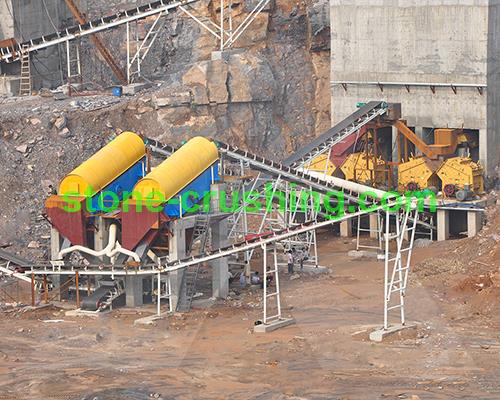
To achieve the desired particle size reduction, various types of crushing equipment are employed in mineral processing circuits. Each equipment type has specific capabilities and limitations, making it crucial to select the right equipment according to the ore characteristics. Commonly used crushers include jaw crushers, cone crushers, impact crushers, and gyratory crushers.
Crushing circuits typically consist of several distinct stages, including primary crushing, secondary crushing, and occasionally, tertiary crushing. The primary crushing stage involves breaking down the ore to a manageable size using a primary crusher, such as a jaw crusher or gyratory crusher. The secondary crushing stage further reduces the size of the ore using a secondary crusher, optimizing the liberation and preparing it for downstream processing. In some cases, a tertiary crushing stage is incorporated for finer size reduction.
Designing an efficient crushing circuit requires careful consideration of various factors. These include ore characteristics (such as hardness and abrasiveness), desired product size, capacity requirements, and the crushing equipment's operational limitations. Additionally, the selection of appropriate crushers, screens, and conveyors must be optimized to ensure smooth material flow and minimize bottlenecks.
The success of any mineral processing operation relies heavily on the efficiency and effectiveness of its crushing circuit. Properly designed circuits can greatly enhance the recovery of valuable minerals and reduce operation costs. By optimizing the size reduction process, circuits can enhance the liberation of minerals, ensuring maximum exposure to downstream processing methods. Furthermore, well-designed circuits minimize energy consumption, reduce equipment wear and tear, and improve overall plant performance.
Crushing circuits are the backbone of mineral processing, facilitating the extraction of valuable minerals from raw ores. By understanding the fundamentals of crushing circuits and considering key design considerations, mineral processing plants can optimize their operations for improved efficiency and profitability. Whether it is primary, secondary, or tertiary crushing, the ultimate aim is to create a well-designed circuit that maximizes mineral liberation, enhances downstream processing, and minimizes operational costs. With advancements in technology and ongoing research, crushing circuits continue to evolve, leading to more sustainable and effective mineral processing practices.



