Language Spare Parts Google Views

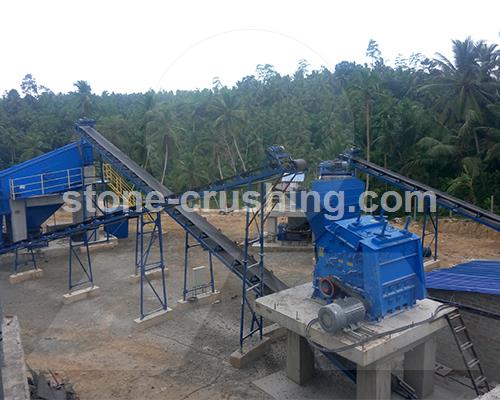
In the realm of mineral extraction, copper holds a prominent position as one of the most essential metals in various industries. With its excellent electrical and thermal conductivity, copper has become a vital component in infrastructure, electronics, and renewable energy technologies. To meet the growing global demand for copper, efficient processing methods have become crucial. This article delves into the significance of crushers and screens in copper ore processing, highlighting their role in enhancing operational efficiency and productivity.
1. Crushers: Breaking Down the Ore Crushers play a fundamental role in the initial stages of copper ore processing. These robust machines are designed to reduce the size of raw ore to a manageable level, facilitating subsequent processing steps. Different types of crushers, including jaw crushers, gyratory crushers, and cone crushers, are employed based on the specific characteristics of the ore and the desired final product size.
2. Screens: Sorting and Classifying Once the ore is crushed, screens come into action to further refine the material. Screens are utilized to separate the crushed ore into different size fractions. This process enables the removal of finer particles and ensures the ore is properly classified for subsequent processing stages. Vibrating screens, trommel screens, and inclined screens are commonly used in copper ore processing plants, providing efficient and accurate separation of particles.
3. Primary Crushing: Jaw Crushers in Action Jaw crushers are often employed in primary crushing operations in copper ore processing plants. These powerful machines use a fixed jaw and a moving jaw to exert pressure on the ore, breaking it into smaller pieces. The crushed material is then conveyed to secondary crushers for further processing. Jaw crushers offer high capacity and can handle large-sized feed material efficiently, contributing to increased productivity.
4. Secondary and Tertiary Crushing: Gyratory and Cone Crushers Gyratory and cone crushers are typically used for secondary and tertiary crushing stages in copper ore processing. These crushers operate by compressing the ore between an eccentrically rotating mantle and a stationary concave, resulting in the reduction of ore size. Gyratory crushers excel at handling large feed sizes, while cone crushers are renowned for their versatility and precise particle size control.
5. Screen Efficiency: Maximizing Throughput Efficient screening is crucial for optimizing copper ore processing plants. By selecting the appropriate screen size and design, operators can ensure high screening efficiency and maximize throughput. Additionally, regular maintenance and inspection of screens help prevent blinding and clogging issues, ensuring uninterrupted operations.
In the realm of copper ore processing, crushers and screens play a vital role in enhancing operational efficiency, maximizing throughput, and achieving desired product quality. Crushers break down the ore into manageable sizes, while screens refine the material by separating it into different size fractions. Choosing the right combination of crushers and screens, along with proper maintenance, enables operators to achieve optimal processing efficiency. With the increasing demand for copper worldwide, the effective utilization of crushers and screens becomes paramount in meeting production targets and maintaining a competitive edge in the industry.



