Language Spare Parts Google Views

Cone crushers are an integral part of any rock processing plant and are often used for secondary or tertiary crushing. They are popular in the mining, metallurgy, building materials, construction, and road construction industries for crushing and shaping materials like ores and rocks. In this article, we will discuss the mode of operation of cone crushers and how they efficiently perform the crushing process.
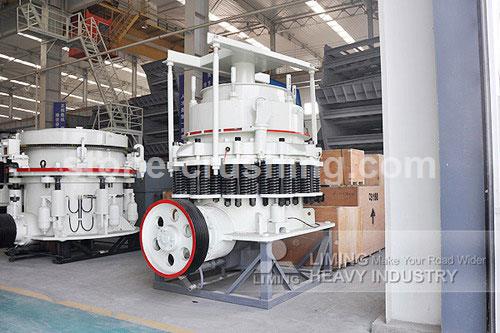
A cone crusher utilizes a mantle that gyrates within a concave bowl, which is often referred to as the crushing chamber. The gyrating action of the mantle creates a compressive force that crushes the rock material against the concave wall. The crushing process is achieved through the squeeze and impact forces between the mantle and the concave.
1. Feeding: The raw materials are fed through the top of the cone crusher. The vibrating feeder helps to achieve a consistent and controlled flow of material into the crushing chamber.
2. Crushing Chamber: As the mantle gyrates, the rock material is crushed and compressed against the concave walls. The geometry of the crushing chamber plays a crucial role in the efficiency of the crushing process.
3. Size Reduction: The size of the crushed material is determined by the gap between the mantle and the concave. Adjusting the gap allows control over the final product size.
4. Discharge: The crushed material exits the crusher through the discharge port at the bottom of the cone crusher. The size of the discharge opening can be adjusted to control the product size and maximize throughput.
5. Continuous Operation: Cone crushers are designed to be operated continuously, ensuring a steady and consistent supply of rock material to the crushing chamber.
1. Versatility: Cone crushers offer a wide range of crushing options. They are capable of crushing various types of rocks with different hardness levels, from soft to hard.
2. Efficiency: Cone crushers are known for their high efficiency and low operating costs. They allow for a high reduction ratio, which results in improved overall productivity.
3. Uniformity of Product: Due to the design of the crushing chamber and the principle of crushing, cone crushers produce uniform and consistent-sized final products.
4. Safety: Cone crushers are equipped with advanced safety features that ensure operator safety and prevent damage to the crusher during tramp iron or overload events.
5. Easy Maintenance: Cone crushers are designed for easy maintenance and repair. With proper maintenance, they can have a long lifespan and deliver reliable performance.
Understanding the mode of operation of cone crushers is crucial to ensure their efficient performance. In a cone crusher, the crushing process is performed between the mantle and the concave, utilizing the gyrating action to squeeze the rock material. Cone crushers have numerous advantages, such as versatility, high efficiency, and easy maintenance, making them essential in various industries, particularly in mining and aggregates. By comprehending the functioning of cone crushers, operators can optimize their productivity, enhance product quality, and minimize downtime.
Note: This article provides a general understanding of cone crusher mode of operation. Always follow the manufacturer's guidelines and consult experts for specific instructions.



