Language Spare Parts Google Views

When we delve into the world of mining, aggregate production, and industrial crushing processes, the significance of the cone crusher cannot be overstated. Among the many types of crushers available today, cone crushers are perhaps one of the most widely used due to their adaptability and efficiency in various applications. A critical aspect often overlooked by industry insiders and newbies alike is the importance of understanding the cone crusher’s cross section. This knowledge not only enhances our comprehension of its inner workings but also informs decisions around maintenance and operational efficiency.
A cone crusher is a type of compression crusher that uses a rotating piece of steel, known as the mantle, to crush material against a stationary piece of steel, called the concave. The design enables it to achieve an optimal size reduction while offering enhanced dimensional control of the processed materials. Cone crushers are primarily utilized in the mining and aggregate industries and are particularly effective for hard or abrasive rock.
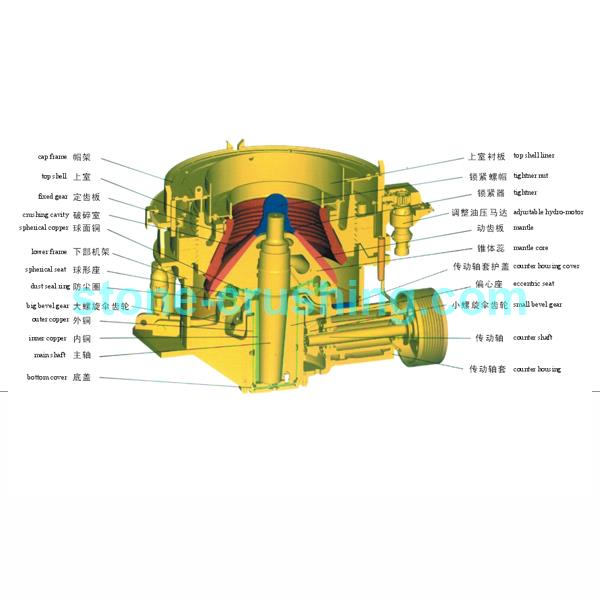
A cone crusher cross-section provides a detailed look at its internal components and layout. Understanding this cross-sectional view is essential for several reasons:
1. Visualizing Operation: By examining a cross section, one can visualize how the different parts interact – from the drive mechanism down to the crushing chamber. This understanding helps equipment operators anticipate how the machine will perform under various conditions.
2. Maintenance Insights: Regular maintenance is crucial for prolonging the life of a cone crusher. The cross-section can reveal wear patterns of components like the mantle and concave, allowing for more precise scheduling of wear part replacements and thereby decreasing downtime.
3. Troubleshooting Issues: When equipment malfunctions, understanding the cross-sectional anatomy allows technicians to diagnose problems more efficiently. If material is not being crushed to the desired size, a technician can check wear on specific parts visible in the cross-section and determine if replacements or adjustments are necessary.
Some of the critical components visible in a standard cone crusher cross-section include:
- Mantle and Concave Liners: These parts work together to create the crushing area where rock is broken down. The shape and condition of these components are crucial to effective crushing and need to be monitored closely.
- Main Shaft Assembly: This part transfers the crushing force from the eccentric motion of the mantle to the material being crushed. Its integrity directly impacts the crusher's performance.
- Hydraulic System: Most modern cone crushers incorporate a hydraulic system that allows for adjustments, helping maintain optimal crushing pressures and ensuring safe operation.
- Bowl Assembly: This component serves as the housing for the concave liners and holds the materials in place while being crushed.
Understanding the cross section of a cone crusher is more than just a technical pursuit; it's an essential part of ensuring functionality and efficiency in operations. By gaining insights into how these heavy-duty machines operate and the critical components that make up their structure, operators and maintenance teams can improve performance, enhance safety, and extend the lifespan of their equipment.
Through a clear understanding of the cone crusher's cross-section, industry professionals can embrace knowledge that translates into practical efficiencies on the ground – a pivotal advantage in today's competitive mining and aggregate production landscape.



