Language Spare Parts Google Views

In the world of mineral processing, crushing and grinding equipment play a vital role in extracting valuable minerals from raw ores. With a wide variety of machines available, understanding the classification of these equipment is crucial for efficient and effective mineral processing operations. In this article, we will delve into the classification of crushing and grinding equipment, shedding light on their key features and applications.
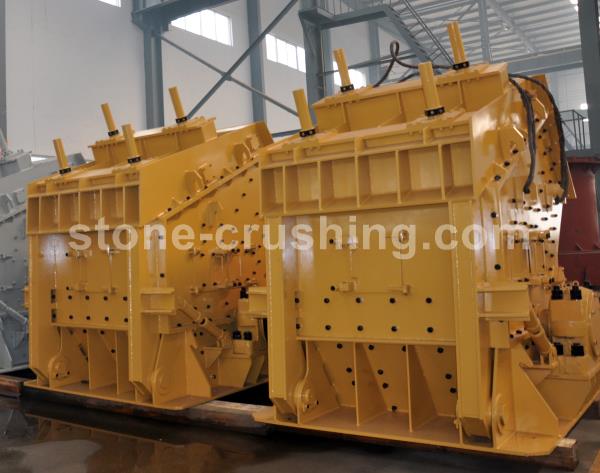
1. Primary Crushers: Primary crushers are the first step in the mineral processing circuit, responsible for breaking down large-sized rocks into smaller fragments. They are typically used in mining and quarrying operations. Jaw crushers, gyratory crushers, and impact crushers fall under this category. Jaw crushers are versatile and widely used, offering high reduction ratios. Gyratory crushers excel in handling hard and abrasive materials. Impact crushers are suitable for softer materials and provide excellent cubicity.
2. Secondary Crushers: Secondary crushers work in tandem with primary crushers to further reduce the size of the crushed material. Cone crushers, roll crushers, and hammer mills are commonly used secondary crushers. Cone crushers are ideal for producing cubical-shaped aggregates and finely crushed ores. Roll crushers are versatile and used for medium to fine crushing, while hammer mills are employed for brittle materials or where precise product sizing is required.
3. Tertiary Crushers: Tertiary crushers are employed when further reduction in size is necessary. They are used to produce finer materials for downstream processes such as grinding mills. Vertical shaft impactors (VSI) and high-pressure grinding rolls (HPGR) are two commonly used tertiary crushers. VSIs excel at shaping and producing fine aggregates, while HPGRs are well-suited for energy-efficient grinding and reducing the number of stages in the grinding circuit.
4. Grinding Mills: Grinding mills are crucial in the comminution process, reducing the size of particles by applying mechanical forces. Ball mills, rod mills, and SAG (Semi-Autogenous Grinding) mills are widely used grinding mills. Ball mills are versatile and commonly used for primary grinding. Rod mills are efficient for secondary grinding and produce a more uniform product. SAG mills utilize both grinding balls and autogenous impacts, suitable for large-scale operations.
5. Classification Equipment: Classification equipment is employed to separate particles based on their size and shape, ensuring optimal efficiency in grinding and mineral recovery. Vibrating screens, hydrocyclones, and spiral classifiers are common classification equipment. Vibrating screens efficiently separate oversize particles, while hydrocyclones remove finer particles. Spiral classifiers are used to separate coarse and fine materials based on their settling rates in water.
Understanding the classification of crushing and grinding equipment is crucial for successful mineral processing operations. From primary crushers to grinding mills and classification equipment, each machine serves a unique purpose in the comminution process. By selecting the right equipment for the job, mining and quarrying operations can achieve optimal performance and maximize the recovery of valuable minerals.



