Language Spare Parts Google Views

Crushers are essential pieces of equipment in many industries, including mining, construction, and recycling. These machines come in various types, including jaw crushers, cone crushers, impact crushers, and roll crushers. While all these crushers are designed to crush materials, they differ in their mechanisms of action, resulting in unique benefits and drawbacks.
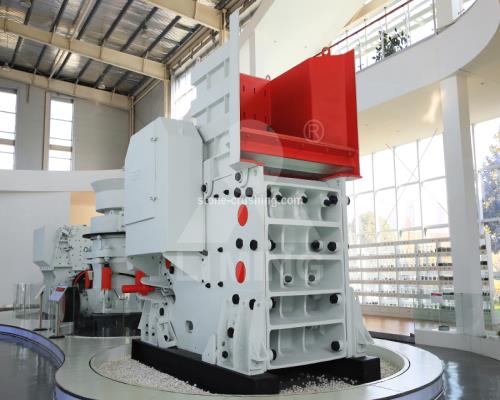
Jaw Crushers Jaw crushers are the most common type of crusher used in mining and quarrying operations. They work by compressing material between two plates, with one fixed and the other moving back and forth. Jaw crushers are known for their simplicity and reliability, making them a popular choice for primary crushing applications.
Cone Crushers Cone crushers are used in secondary and tertiary crushing applications. They operate by compressing material between a mantle and a concave bowl. Cone crushers are known for their high efficiency and low operating costs, as well as their ability to produce a more uniform product size.
Impact Crushers Impact crushers are used for crushing materials that are less abrasive and less hard, such as limestone and coal. They work by accelerating the material into a stationary plate or bar, which causes the material to be crushed. Impact crushers are versatile and can be used in both primary and secondary crushing applications.
Roll Crushers Roll crushers are used for crushing materials with a compressive strength of less than 300 MPa, such as coal, salt, and soft shale. They work by compressing the material between two rotating rolls, one of which is in a fixed position and the other in a movable position. Roll crushers are known for their high reduction ratio and low noise level.
In conclusion, understanding the differences between jaw crushers, cone crushers, impact crushers, and roll crushers is crucial when selecting the appropriate crusher for your application. Factors such as material hardness, size, and shape, as well as the desired product size and production rate, should be taken into consideration when making your decision.



